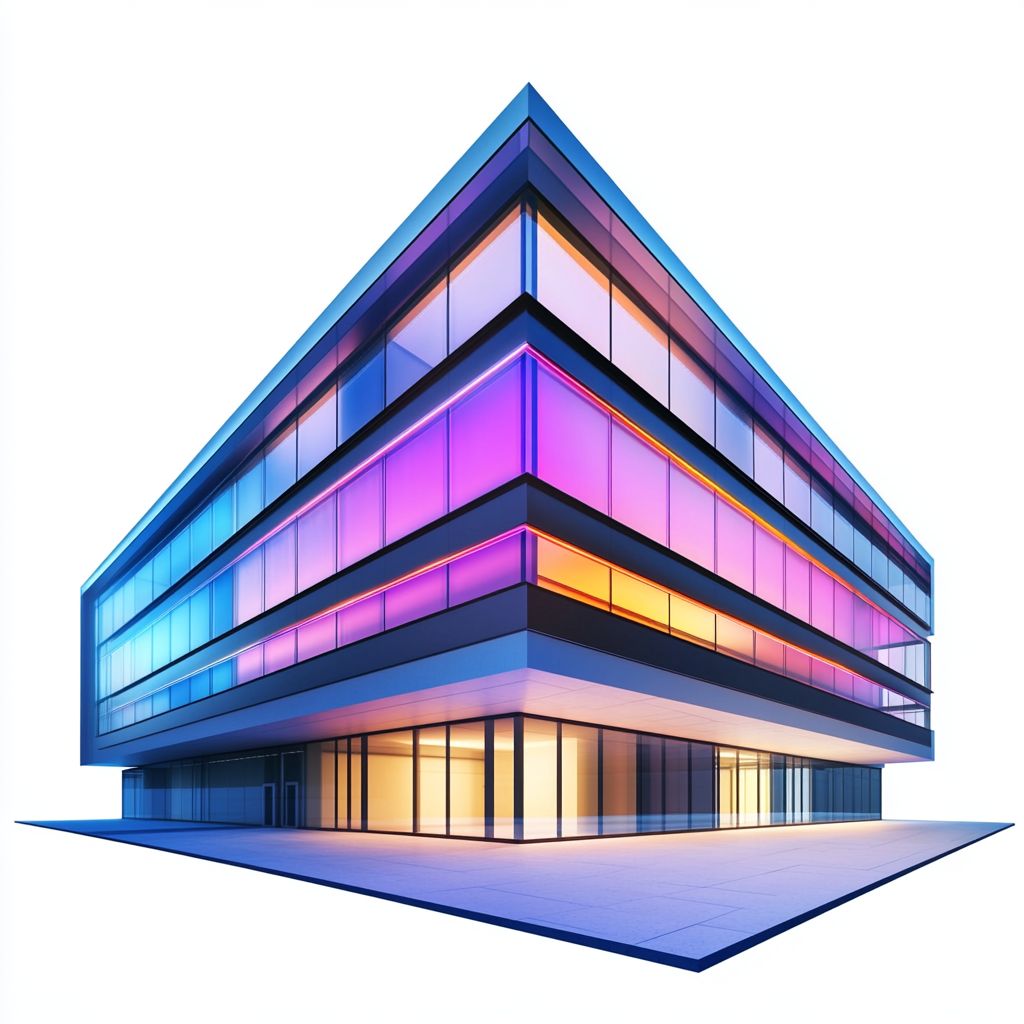
Lighting Trends in Modern Architecture
How contemporary lighting design is transforming architectural spaces and human experience.
Lighting has always been a critical element of architecture, but modern technology and design thinking have elevated it to an art form. Today's architectural lighting goes beyond mere illumination — it shapes mood, guides movement, and creates immersive experiences.
From human-centric lighting systems that support circadian rhythms to dramatic accent installations that define spatial character, we explore the trends that are revolutionizing how we experience built environments.
Human-Centric Lighting and Circadian Design
The relationship between light and human biology is no longer a footnote in architectural planning — it's becoming a central design driver. Research into circadian rhythms has made it abundantly clear that the quality, color temperature, and timing of light exposure profoundly affect sleep, mood, cognitive performance, and long-term health. Architecture is finally catching up to that science.
Human-centric lighting systems dynamically adjust throughout the day. Cool, bright light in the morning stimulates alertness and focus. Warmer, dimmer tones in the afternoon and evening support relaxation and prepare the body for rest. These transitions happen gradually and imperceptibly, mimicking the arc of natural daylight even in environments where windows are limited or absent.
The impact is especially pronounced in workplaces, hospitals, and educational facilities — spaces where people spend prolonged hours under artificial light. Early adopters have reported measurable improvements in productivity, patient recovery times, and student attention spans. As the technology becomes more affordable and the evidence base grows, human-centric lighting is shifting from a premium wellness feature to a baseline expectation of responsible design.
The Return of Natural Light as a Design Material
While artificial lighting technology advances at a remarkable pace, there's a parallel movement that treats natural light itself as the primary design material. Architects are rediscovering techniques that civilizations have used for centuries — light wells, clerestories, reflective surfaces, and carefully calibrated apertures — and combining them with modern materials and computational modeling.
The results are spaces that feel alive. Sunlight moves across floors and walls as the day progresses, creating shifting patterns and gradients that no artificial system can replicate. Shadows become compositional elements rather than problems to be eliminated. Seasonal variation adds a layer of temporal richness that connects occupants to the world outside, even within dense urban settings.
This approach demands a deeper collaboration between architects and lighting designers from the earliest stages of a project. Orientation, massing, facade design, and interior material selection all become lighting decisions. The payoff is environments that feel fundamentally more human — spaces that breathe with the rhythm of the day rather than sitting under a flat, unchanging wash of artificial brightness.
Integrated and Invisible Fixtures
One of the most striking shifts in contemporary lighting design is the disappearance of the fixture itself. Light is increasingly embedded into architectural surfaces — recessed into walls, concealed within ceiling coves, integrated into handrails, stairs, and floor joints. The source becomes invisible while its effect defines the entire spatial experience.
LED technology has been the primary enabler of this trend. The compact form factor, low heat output, and extraordinary flexibility of LED strips and micro-fixtures allow designers to place light exactly where it's needed without compromising the clean lines of modern architecture. Linear lighting traces the geometry of a room, accentuating edges and planes. Indirect illumination bounces off surfaces to create soft, diffused ambiance without a single visible bulb.
The philosophical shift here is significant. Traditional lighting design often treated fixtures as decorative objects — chandeliers, pendants, sconces chosen for their visual presence. The integrated approach treats light as an architectural element on par with material, form, and proportion. The fixture is no longer the point. The quality of light it produces is.
Dramatic Accent and Sculptural Installations
At the opposite end of the spectrum from invisible integration, a bold counter-trend celebrates lighting as spectacle. Large-scale sculptural installations — cascading arrays of pendants, kinetic light sculptures, immersive LED environments — are becoming signature features of cultural institutions, hospitality spaces, and flagship retail environments.
These installations serve multiple purposes simultaneously. They provide functional illumination, certainly, but they also act as spatial landmarks, wayfinding elements, and powerful brand statements. A dramatic lighting installation in a hotel lobby doesn't just light the space — it is the space. It becomes the image guests photograph, the detail they remember, the element that distinguishes one experience from every other.
The most successful examples strike a balance between visual drama and spatial sensitivity. They command attention without overwhelming the architecture around them. They respond to context — scale, ceiling height, material palette, acoustic conditions — rather than imposing a generic spectacle onto an indifferent shell. When this balance is achieved, the result is something genuinely unforgettable.
Smart Lighting and Responsive Environments
Connected lighting systems are transforming buildings from static containers into responsive organisms. Sensor networks detect occupancy, ambient light levels, and even individual preferences, adjusting illumination in real time without any conscious input from the people within the space.
The energy implications alone are substantial. Spaces that dim or switch off when unoccupied, that supplement rather than replace available daylight, and that optimize output based on actual need rather than fixed schedules can reduce lighting energy consumption by forty to sixty percent. In an era of urgent sustainability targets, this is not a marginal gain.
But the potential extends well beyond efficiency. Smart lighting systems generate rich data about how spaces are actually used — which zones are occupied when, how people move through a building, where they linger and where they pass through quickly. This information feeds back into design, helping architects and facility managers refine spatial layouts, improve wayfinding, and create environments that genuinely serve the patterns of their occupants rather than assumptions made during the design phase.
Light as the Fifth Material
Across every trend explored here, a unifying principle emerges: light is no longer treated as a service to be provided but as a material to be designed. It sits alongside concrete, glass, timber, and steel as a fundamental component of architectural expression. It has texture, warmth, direction, rhythm, and character. It can be generous or restrained, dramatic or quiet, static or alive.
The architects and designers who understand this are producing the most compelling spaces of our time. They think about light from the first sketch, not as an afterthought layered on once the structure is resolved. They consider how light interacts with every surface, how it changes across hours and seasons, and how it affects the emotional state of every person who moves through the space.
For anyone involved in shaping the built environment — whether as an architect, interior designer, developer, or client — the message is clear. Lighting is no longer a technical specification to be delegated. It is one of the most powerful tools available for creating spaces that are not only functional and beautiful, but deeply attuned to the humans who inhabit them.